Design Work Breakdowns
AKA: Case Studies , Deep Dives
I document because production moves fast and lessons get lost.
Future-me needs to remember why we made these choices.
Future teams need to understand what worked.
And you need to see how I think.
How I solve design problems, iterate on systems, and ship games.
These aren't polished portfolio pieces—they're honest breakdowns that show mechanical analysis, iterative problem-solving, and the thinking behind shipped work.
The mess, the pivots, and what I learned.
Filter : Category
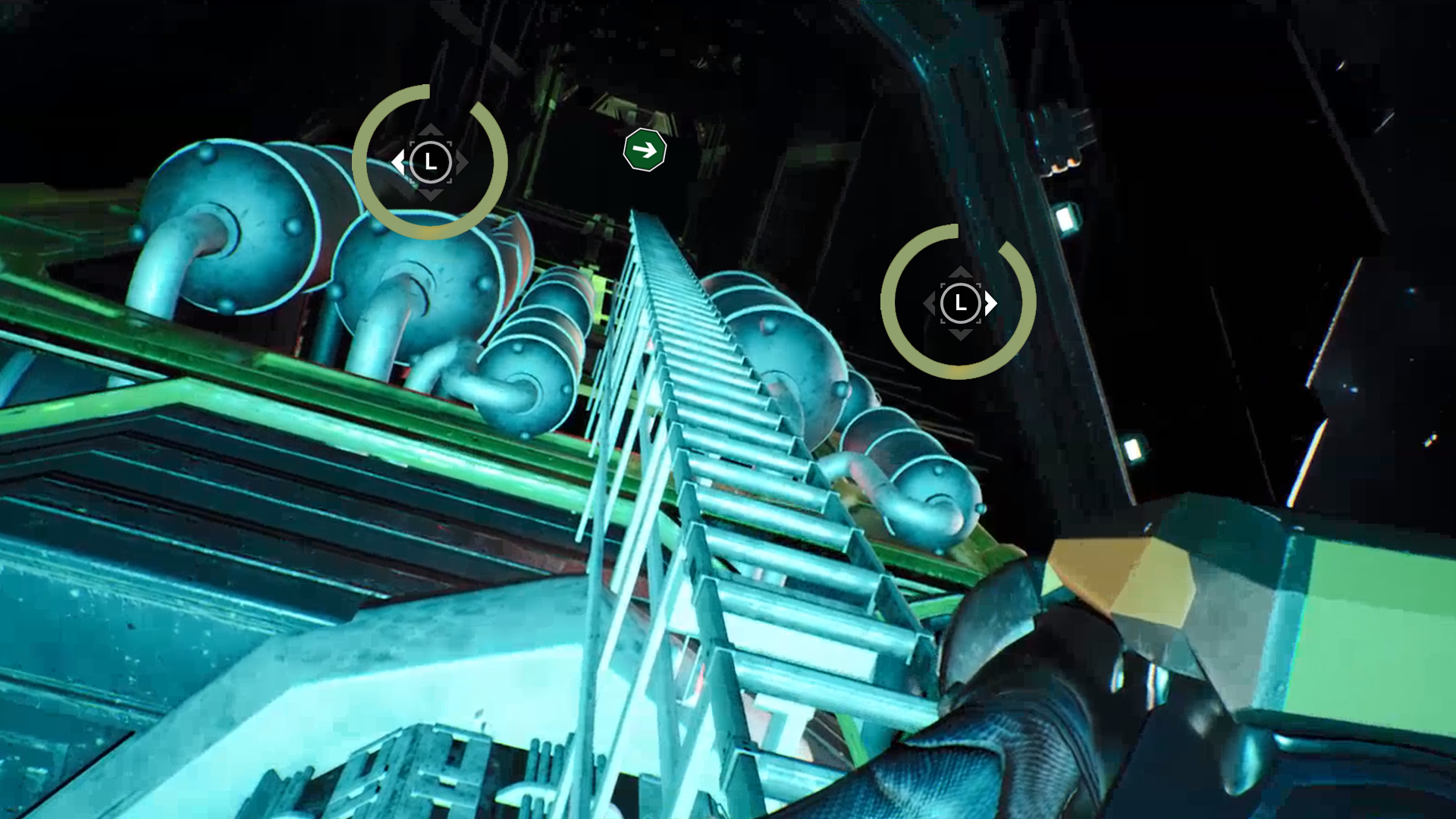
Interactive Cinematic Design, Pt 2: The Ladder
The Expanse: A Telltale Series, Episode 1 | Design-Driven Prototyping
Part 2 of interactive cinematic design series: How a brief scripted moment became the proof-of-concept that validated the Point Targeting System (PTS) for narrative-driven gameplay
The Challenge: The PTS prototype worked technically but needed proof it could create compelling non-combat gameplay. A brief scripted moment—Drummer climbing a ladder after nearly being blasted off the ship—presented the perfect opportunity to demonstrate the system's narrative potential.
My Role: Championed turning this 3-4 line script moment into interactive gameplay. Led the prototyping effort, solving technical challenges (motion capture stitching, unusual spatial orientation, camera constraints) while designing the dodge sequence flow and establishing implementation patterns for future PTS moments.
The Solution: Built a high-stakes climbing sequence where players dodged falling debris using the PTS framework. Navigated scope concerns by keeping the design achievable while proving the system could deliver emotional tension without combat.
Impact: Became the definitive proof-of-concept that validated PTS for narrative-driven gameplay. The Ladder directly influenced the series's creative direction—Episode 5 featured heavy PTS usage throughout its runtime. The workflow and technical solutions established here became the template for all subsequent interactive moments.

Interactive Cinematic Design, Pt 1: The Point Targeting System
The Expanse: A Telltale Series | Multi-Disciplinary Strike Team
Part 1 of interactive cinematic design series: How we prototyped the Point Targeting System to inject player agency into cutscenes for The Expanse: A Telltale Series.
The Challenge: Our narrative-driven game needed a way to inject meaningful player agency into cinematic sequences without breaking storytelling flow. Traditional passive cutscenes undermined immersion, but typical Quick Time Events felt too "gamified" for our tone.
My Role: As a bridge between animation and design on the strike team, I focused on translating high-level concepts into testable, iterative prototypes. I handled environment blocking, implemented the foundational timing in our in-house Storyteller tool, and executed the first full integration of the PTS with UI and player input.
The Solution: We developed the Point Targeting System—a spatial targeting mechanic that maintained cinematic camera control while giving players meaningful input through subtle joystick-based target acquisition. This decoupled player interaction from camera control, solving the "overly gamified" problem.
Impact: The prototype validated our core design assumptions and established a systemic foundation that was directly adapted for the pivotal high-tension sequence "The Ladder" at the end of Episode 1. The workflow we established significantly reduced feedback loop time for designers, enabling rapid iteration on timing and target placement.