Design Work Breakdowns
AKA: Case Studies , Deep Dives
I document because production moves fast and lessons get lost.
Future-me needs to remember why we made these choices.
Future teams need to understand what worked.
And you need to see how I think.
How I solve design problems, iterate on systems, and ship games.
These aren't polished portfolio pieces—they're honest breakdowns that show mechanical analysis, iterative problem-solving, and the thinking behind shipped work.
The mess, the pivots, and what I learned.
Filter : Category
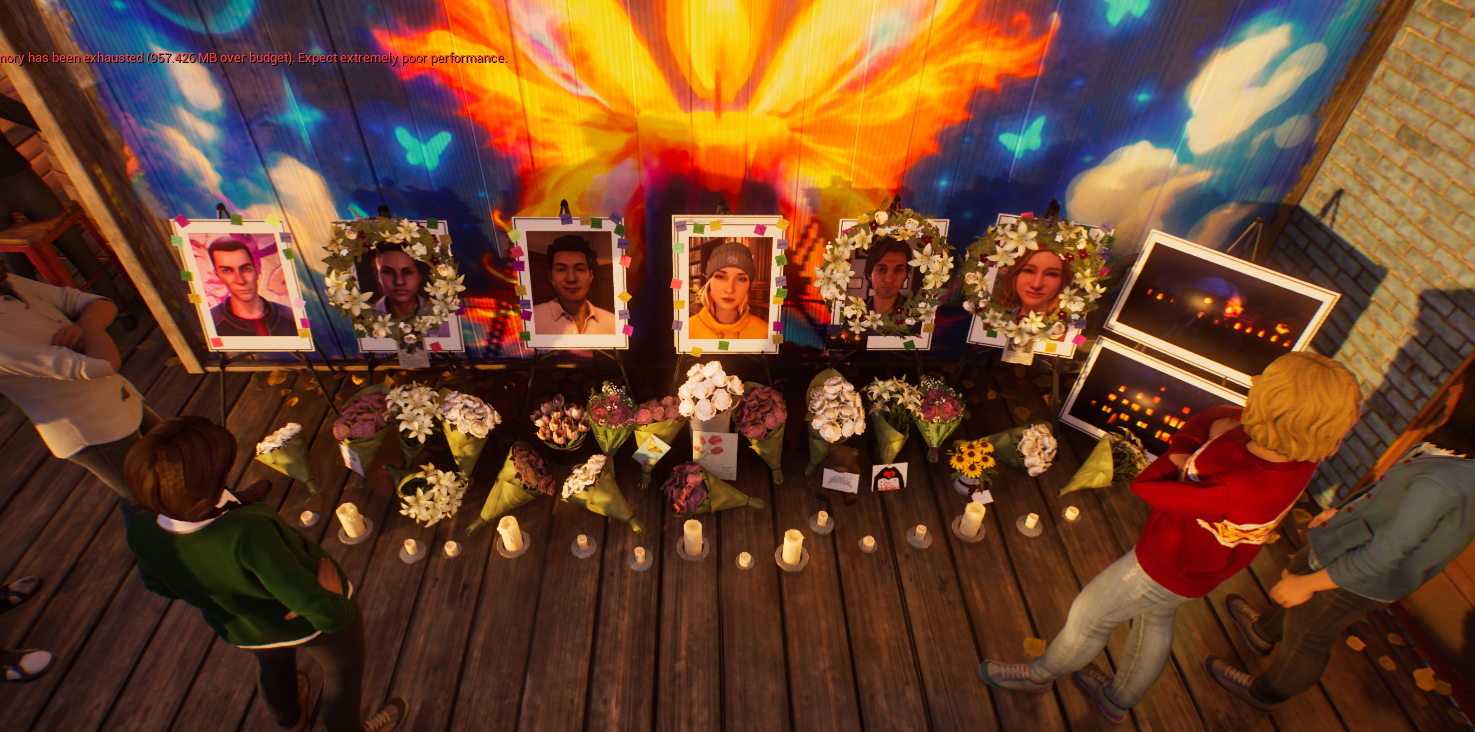
Extending the Script: Memorial Wall Design
The Challenge: Despite tracking eight character variables, the Memorial Wall free-look was simply using on-off logic with its hotspots. This didn't feel like an appropriate payoff or a fully deliberate way of representing the player's choices along their journey through the game. Visually, the wall needed a rhyme and reason, and it was my design task to set that up.
My Role: I owned the Memorial Wall scene from import through ship, identifying payoff gaps in the script's on-off logic, designed and implemented an outcome system using data layers to represent four separate outcome severities, collaborated with Environment on set dressing direction, and managed variable logic and edge case fixes through final submission.
The Solution: Using data layers already proven in production, I designed a four-layer outcome system driven by a hybrid of dedicated character checks and an aggregated student death count. Each layer delivered a distinct, intentional result — differentiated through set dressing, NPC counts, and environmental storytelling.
Impact: By working within existing systems, I extended what was already in the pipeline into something the player could actually feel — player choices had somewhere to land, without pulling resources from other teams.
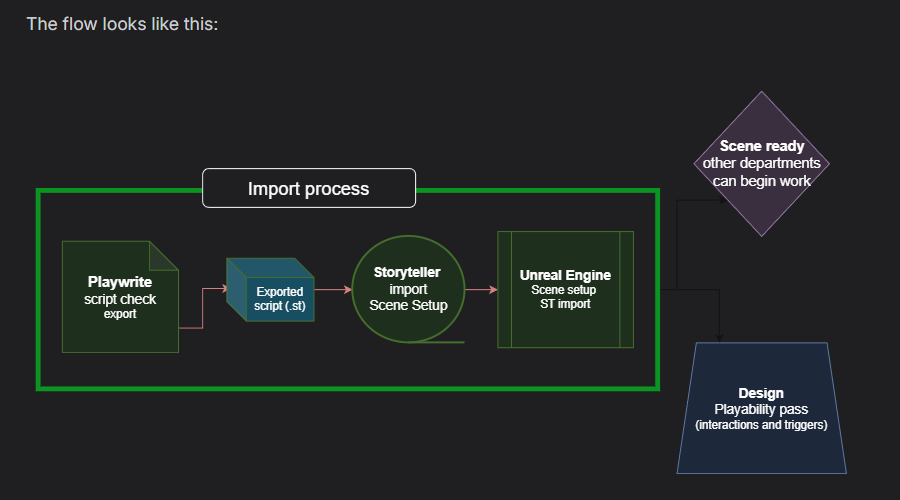
From 50 Steps to 5: Improving Scene Import Workflow
Life is Strange: Reunion | Designer Advocacy in Pipeline Development
The Challenge: Script import required 50+ manual steps per scene—creating hotspots, copying tags character-by-character, configuring data layers. Typos broke interactions. Missed steps prevented scenes from loading. Designers couldn't reach playable state fast enough to catch design issues when they were cheapest to fix.
My Role: Represented Design in D9Sequencer development. Documented pain points from production experience, provided weekly testing feedback, then validated the improved workflow by importing all 40 game scenes.
The Solution: Translated designer pain into feature requests—automated hotspot creation, grid placement, non-destructive test imports. Time saved shifted upstream to logic validation, ensuring cleaner handoffs to downstream teams.
Impact: 50+ steps became 5. One designer imported all 40 scenes—scope that would have been impractical before. Pipeline thinking isn't separate from design work. Sometimes improving the team's workflow is the most impactful design contribution you can make.